
What's the Right Age to Start JEE Advanced Preparation?
What's the right age to start JEE Advanced preparation? Class 6 too early, and Class 10 too late? Here's the honest, grade-by-grade answer for Indian parents.
7/4/20264 min read
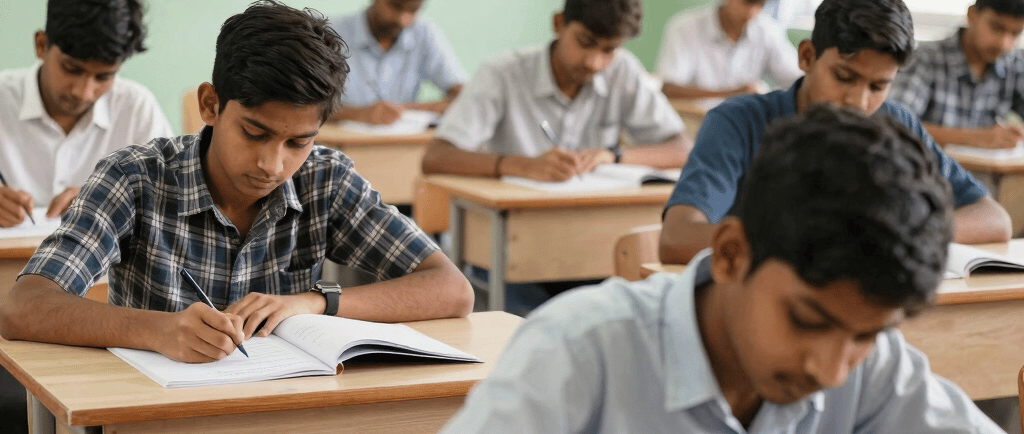
Somewhere between "my child is in Class 6, are we already behind?" and "we've done nothing and it's Class 10 already, is it too late?" sits almost every Indian parent thinking about JEE. Both worries are common. Both, as it turns out, are based on a slightly wrong question.
The right question isn't "what age should my child start JEE preparation." It's "what should my child actually be doing at each age, and when does real JEE preparation even begin?" Those two things get confused constantly, and untangling them removes most of the anxiety.
The Two-Phase Answer Almost Everyone Actually Agrees On
Ask ten coaching institutes when to start, and despite their different marketing, they converge on roughly the same structure:
Phase 1 — Foundation (roughly Class 8 to 10): This is not JEE-syllabus study. It's building genuine concept clarity in maths and science, developing problem-solving stamina, and forming study discipline — skills that make everything afterward easier, without touching JEE-level content itself.
Phase 2 — Actual JEE Preparation (Class 11 to 12): This is when the real syllabus starts. JEE Main and Advanced draw directly from the Class 11–12 NCERT curriculum, so this phase genuinely cannot start meaningfully earlier — there's no JEE-level electrostatics or organic chemistry to "get ahead on" in Class 7, because it isn't taught yet.
The confusion happens when "starting early" gets misread as "studying JEE physics in Class 6." That's not what any serious source actually recommends — and pushing genuine JEE-level content onto a Class 6–7 student usually backfires, creating burnout years before the exam that actually matters.
What "Starting Early" Actually Means
If your child starts in Class 8 or 9, here's what that should look like in practice:
Concept clarity over memorisation — genuinely understanding why a formula works, not just recalling it
Problem-solving stamina — working through a hard problem for 20 minutes without giving up, a habit that's far easier to build at 13 than to build fresh at 16
Exposure to olympiad-style thinking — problems that reward reasoning over recall, which is precisely the skill JEE tests
Study discipline and routine — a consistent habit, not a study personality overhaul at the last minute
None of this requires JEE study material. It requires strong, well-taught fundamentals in exactly the subjects your child is already doing in school — just approached with more rigour and curiosity than a typical school textbook usually asks for.
What If We're Starting Late?
If your child is already in Class 10 and hasn't touched anything JEE-related yet — you have not missed the window. Two years of genuinely serious preparation (Class 11 and 12) is, by every credible account, sufficient to do well in JEE, provided the underlying Class 1–10 concepts are solid. The students who struggle after a "late" start are usually struggling with shaky fundamentals from earlier years, not with lost time specifically on JEE content. Strengthen the fundamentals now, and Class 11 becomes far less overwhelming.
There is no version of this where a strong Class 10 student with two committed years ahead of them is somehow locked out of a good outcome.
"So Should I Even Buy the Grade 6 - 8 Book Yet?"
If you already know your child is likely to go the JEE route, yes — and here's the honest reason why.
Everything in the table above for Grade 6–8 — genuine number sense, curiosity-led problem solving, comfort with "why" instead of just "how" — is real work. It doesn't happen automatically just because a child is young and "not ready for JEE yet." Left unstructured, those years often pass with school-level math handled fine on paper, but without the depth or problem-solving stamina that actually makes Grade 9 foundation work click quickly instead of feeling like a wall.
Where This Leaves You as a Parent
The honest takeaway: there's no single magic age, but there is a right kind of activity for each age. Push JEE content too early and you risk burnout before the exam that counts. Wait until Class 11 with weak fundamentals and you'll spend the two years you actually have catching up instead of getting ahead. The sweet spot most families land on well is Class 8–9 for structured, concept-first foundation work — not because it's magic, but because it gives 2–3 genuinely useful years before the real syllabus starts, without asking a young student to study content that isn't developmentally there yet.
This is precisely the gap MasterLeap Tutor's Master JEE Foundation series (Grades 6–10) is built for. It doesn't front-load JEE-level content onto a Grade 6 student — it builds the concept-first fundamentals and problem-solving habits each grade actually calls for, aligned to CBSE/NEP 2020, so it strengthens what your child is already studying at school rather than competing with it. Whichever grade your child starts in, that book bridges from where they already are.
Explore the JEE Foundation series for Grade 6 here
Explore the JEE Foundation series for Grades 6–10 here
Frequently Asked Questions
Is Class 6 too early to start "JEE preparation"? Yes, if that means JEE-level content — there isn't any JEE-level content to study yet. No, if it means building strong number sense and problem-solving habits, which is exactly what Class 6 is well suited for.
What's the actual difference between "JEE foundation" and "JEE preparation"? Foundation means concept-first mastery of Class 8–10 material with a problem-solving lens. Preparation means directly studying the JEE syllabus, which is drawn from Class 11–12 content and realistically can't start meaningfully before then.
My child is already in Class 9 or 10 and we haven't started anything structured. Are we behind? No. Class 9–10 is exactly when most credible sources say structured foundation work should begin — you're on time, not late.
Does starting earlier guarantee a better JEE rank? No single factor guarantees a rank. Starting early with genuine concept-building tends to reduce last-minute pressure and strengthen the base Class 11–12 material builds on — but consistency across those final two years matters more than the exact starting grade.
Can this be done without enrolling in a coaching institute? Yes, for the foundation phase specifically. Concept clarity and problem-solving habits can be built at home with the right structured material; coaching becomes more commonly used once the actual Class 11–12 JEE syllabus begins, given its volume and pace.